CPU Virtualization
CS 537
CS 537: Operating Systems — CPU Virtualization
Process
What is a process
- A running program is a process
- Stream of executing instructions and their “context”
Thread
- Can have multiple threads within a single process
- Lightweight process
- Share an address space
Why do we need processes?
- Share CPU: Time sharing
OS Scheduler
- Scheduler save context when process is pause
- Restore context on resumption
Goals for CPU Virtualization
- Policy goals
- Virtualize CPU resource using processes
- Reschedule process for fairness? efficiency?
- Mechanism goals
- Efficiency: Time sharing should not add overhead
- Control: OS should be able to intervene when required
Mechanism
System call
- User mode and kernel mode
- User processes run in user mode (restricted mode)
- OS runs in kernel mode (not restricted)
- System call
- Separate user mode from kernel mode for security
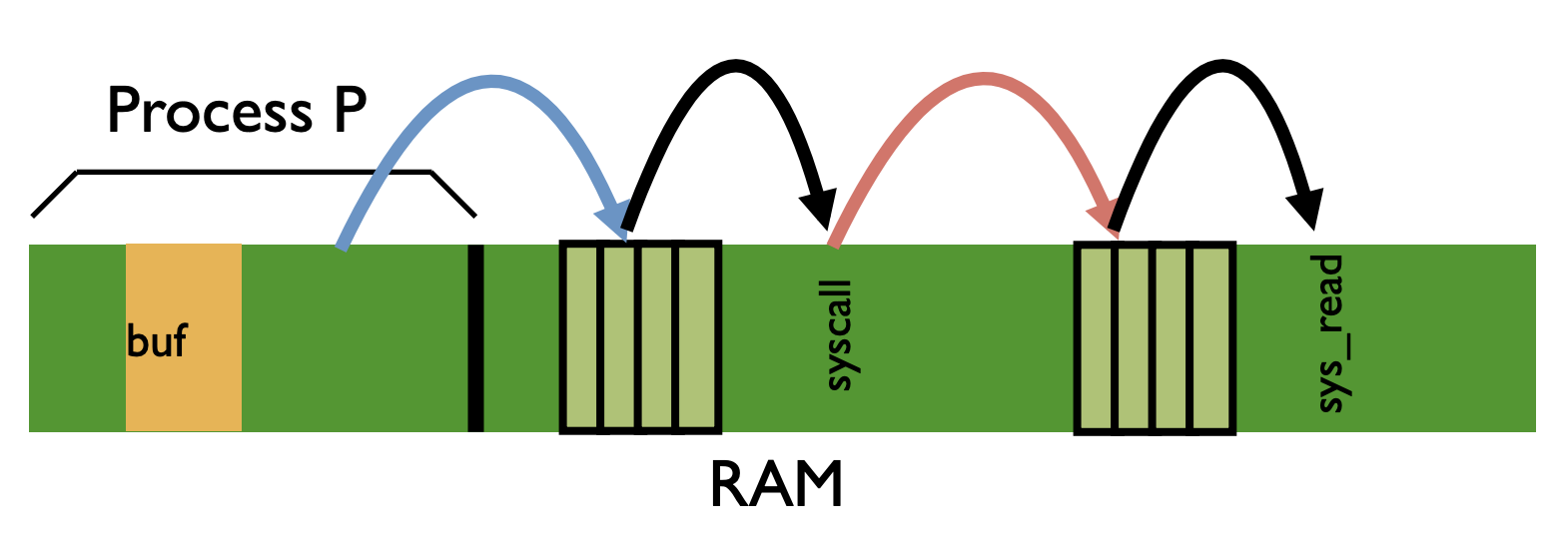
- Use system call to invoke kernel mode functions
- Procedure for calling read()
- Set system call table index to 6
movl $6, %eax - Call trap with id 64
int $64
- Set system call table index to 6
Dispatch mechanism
Dispatch loop
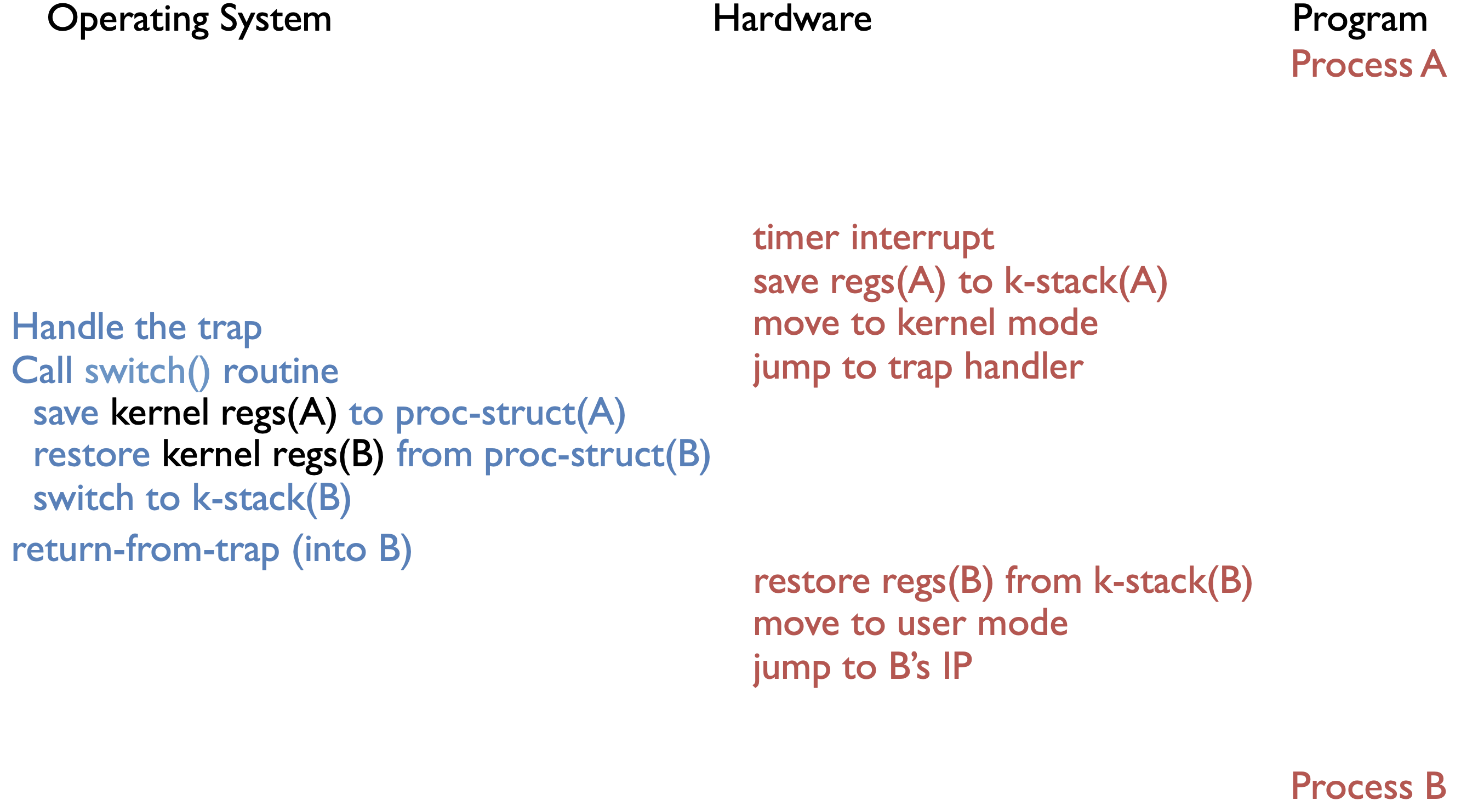
while (1) { run process A for some time-slice stop process A and save its context load context of another process B }Cooperative Multi-tasking
- Trust process to relinquish CPU through traps
- Provide special yield() system call
- Processes can misbehave
Timer-based Multi-tasking
- Hardware generates timer interrupt (CPU or separate chip)
- User must not be able to mask timer interrupt
Policy
Vocabulary
- Workload: set of jobs (arrival time, run_time)
- Job ~ Current execution of a process
- Scheduler: Decides which ready job to run
- Metric: measurement of scheduling quality
- Turnaround time = completion time - arrival time
- Response time = first run time - arrival time
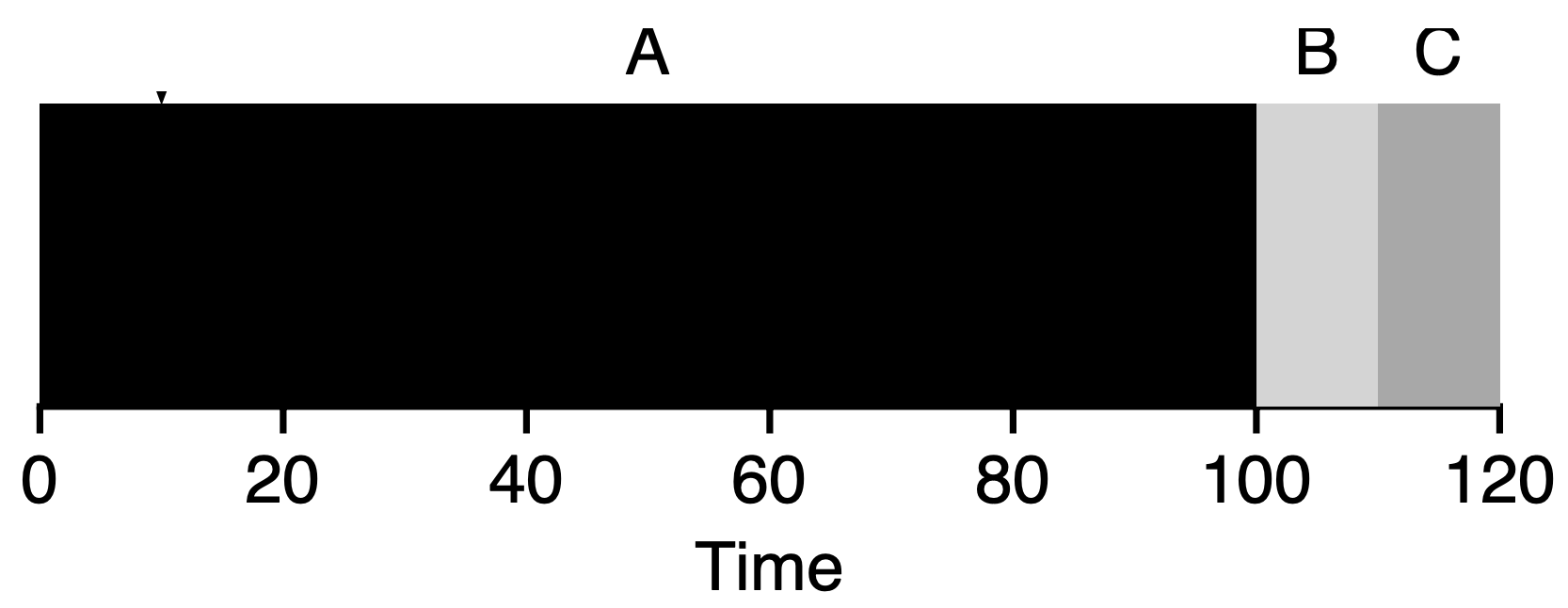
FIFO (First In, First Out)
- Disadvantage: Turnaround time suffers when short jobs must wait for long jobs (Convoy Effect)
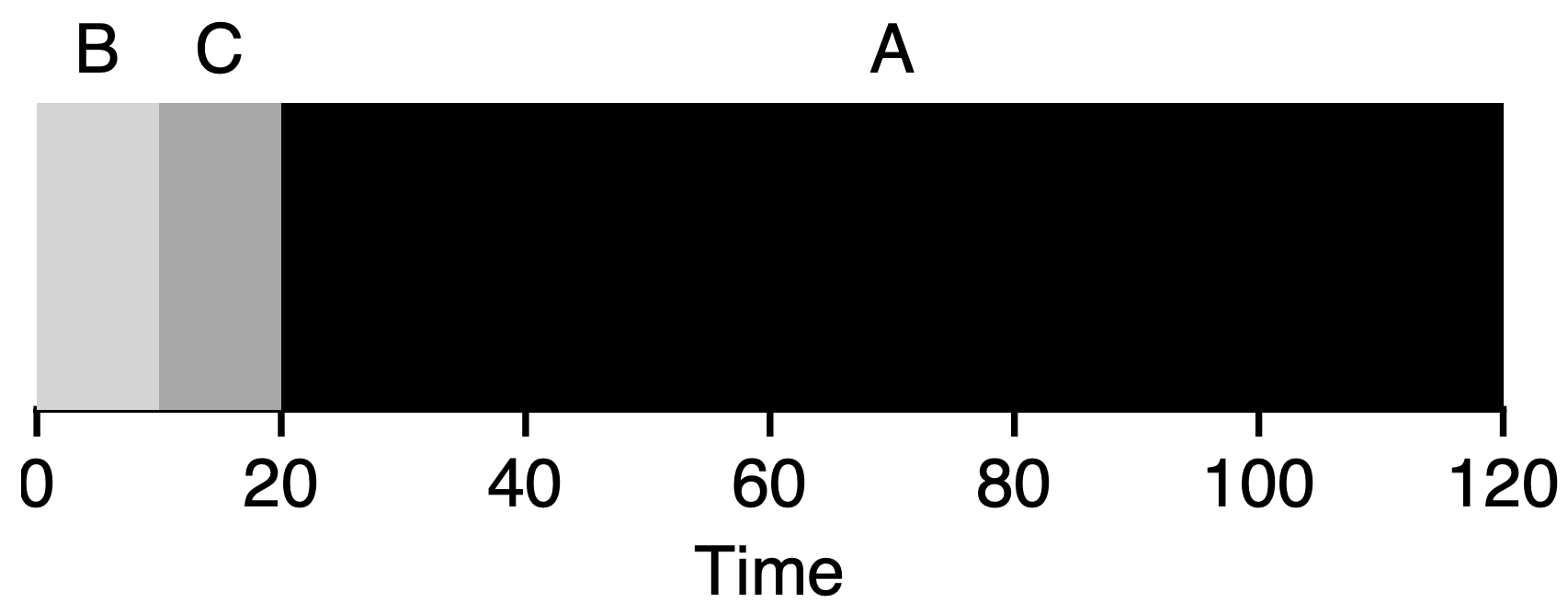
SJF (Shortest job first)
- Disadvantage: Only schedule new job when previous job voluntarily relinquishes CPU
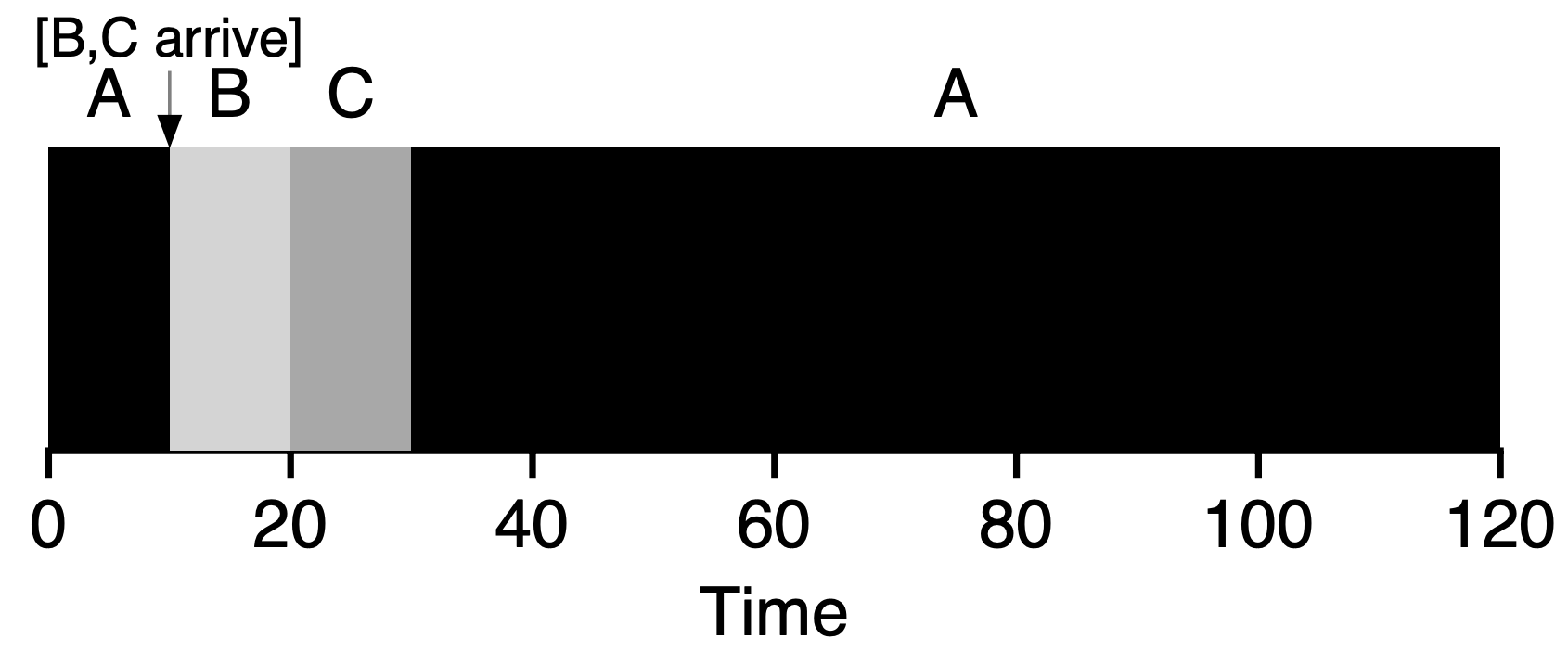
STCF (Shortest Time-to-Completion First)
- Preemptive: Schedule different job by taking CPU away from running job
- Always run job that will complete the quickest
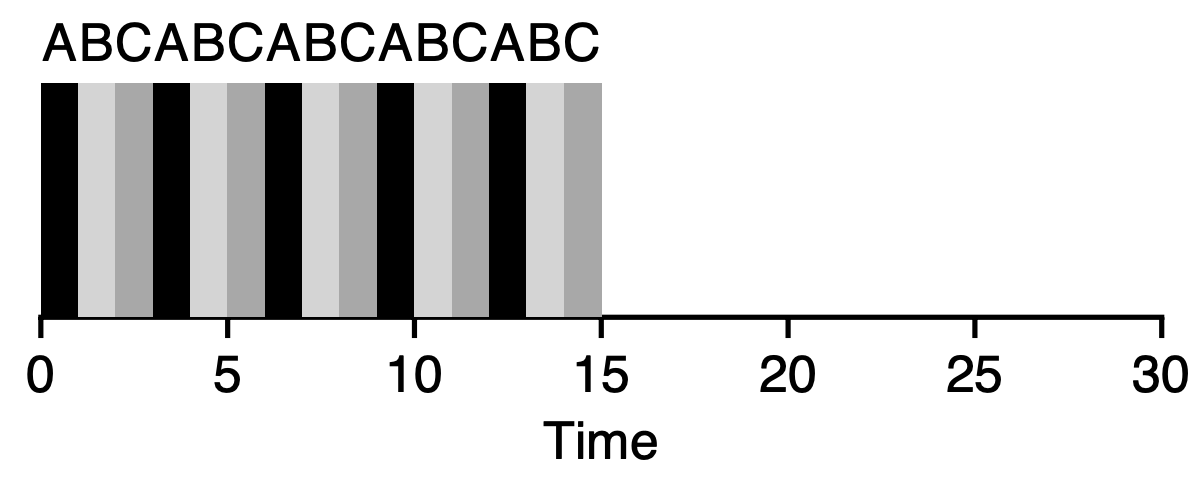
Round Robin
- Goal: reduce response time
- Trade-off: increase turnaround time
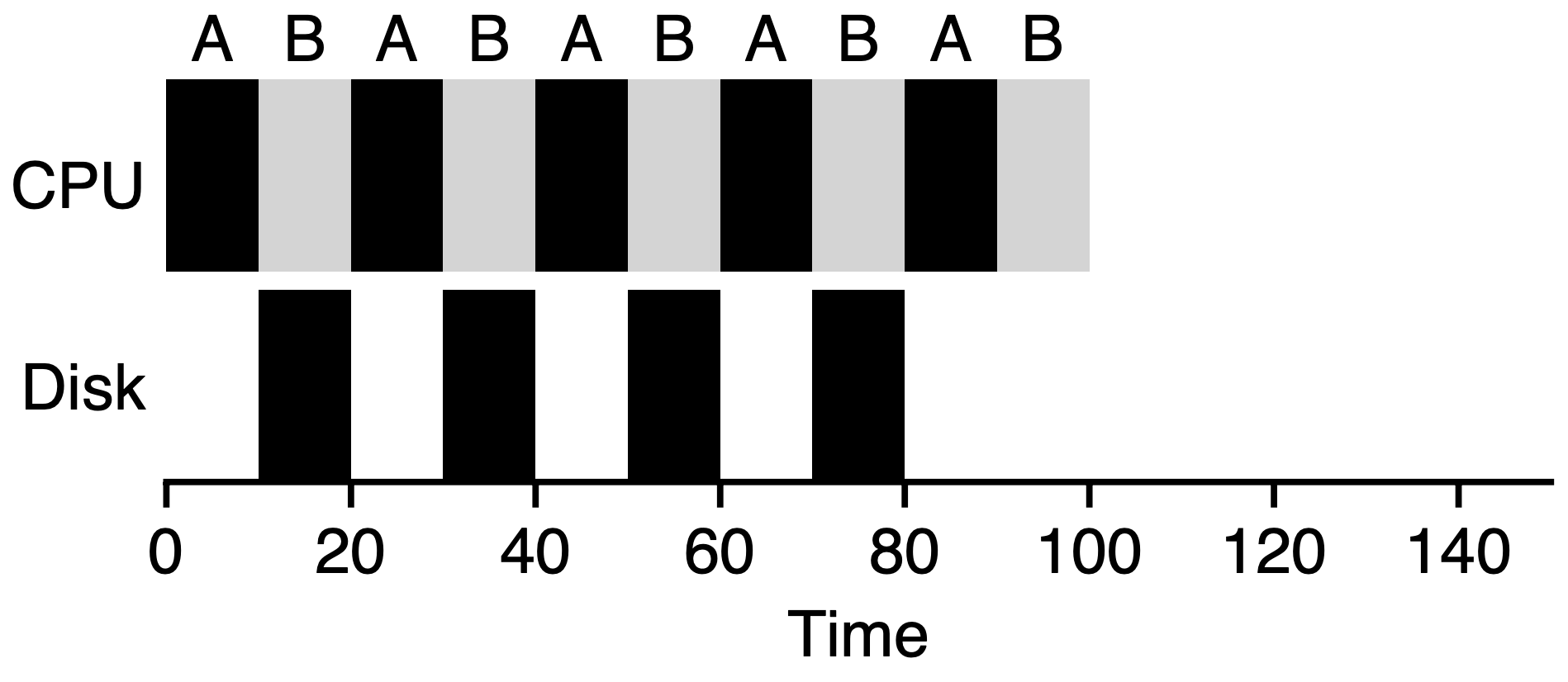
I/O Aware Scheduling
- Goal: process won’t hold CPU when doing IO
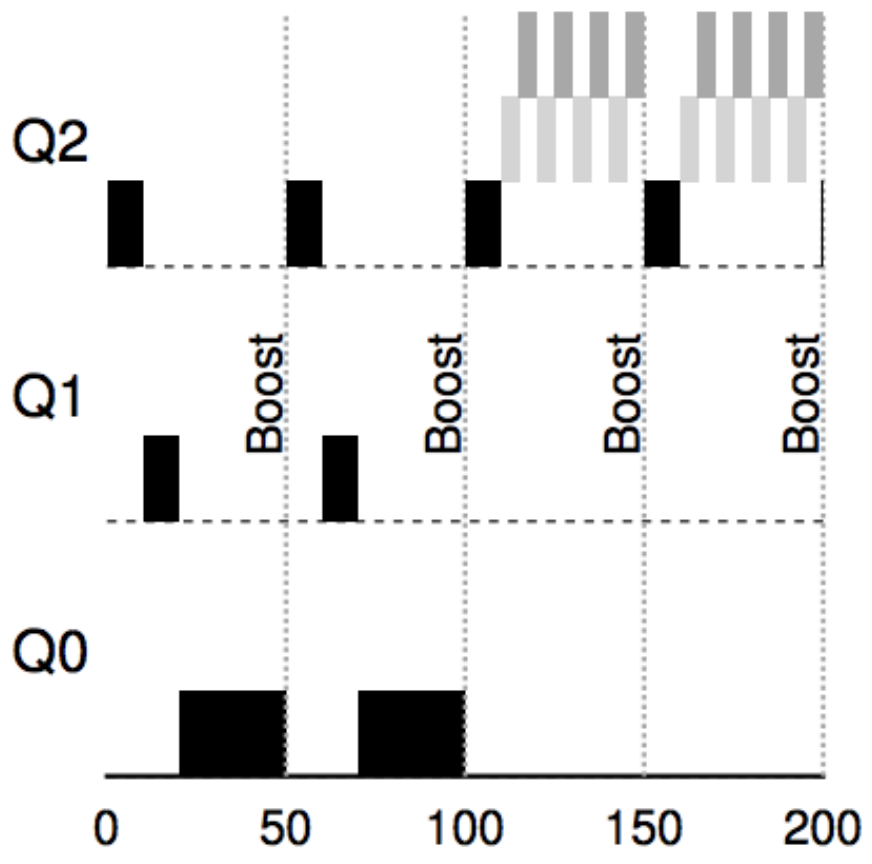
Multilevel Feedback Queue
Motivation: Run-time of each job is not known
Approach
- Multiple levels of round-robin
- Each level has higher priority than lower level
- Can preempt them
Rules
- If priority(A) > Priority(B), A runs
- If priority(A) == Priority(B), A & B run in RR
- Processes start at top priority
- If job uses whole slice, demote process (longer time slices at lower priorities)
Avoid starvation
- Problem: Low priority job may never get scheduled
- Solution: Periodically boost priority of all jobs (or all jobs thathaven’t been scheduled)